
How to Fix Torn Clothes Without Sewing: Easy Fabric Repair Guide
Summary
Dealing with a sudden tear in your favorite shirt or a ripped hem on a school uniform can be frustrating, especially if you do not know how to sew. Fortunately, modern fabric adhesives have made it entirely possible to mend garments seamlessly at home. This guide explains how to fix torn clothes without sewing, walking you through the preparation, application, and curing steps required for a durable, wash-proof repair.
Finding a hole or tear in a beloved piece of clothing often leads to two choices: an expensive trip to the tailor or tossing the garment away. For those who lack sewing skills, fixing damaged fabric feels intimidating. However, fixing clothes without a needle and thread is not only possible but often faster and more seamless than traditional stitching. By using the right liquid adhesive, you can securely bond fabric fibers back together, extending the life of your wardrobe effortlessly.
Why Traditional Sewing Isn't Always the Best Option
While sewing is a valuable skill, it isn't always the most practical solution for everyday clothing emergencies.
- Time-Consuming: Threading a needle and creating tight, uniform stitches takes time and practice.
- Visible Mending: Unless you are highly skilled, hand-stitched repairs are often bulky and visible, especially on fine materials like silk or thin cotton.
- Fabric Distortion: Improper stitching can pucker the fabric, ruining the garment's natural drape and fit.
- Accessibility: Sewing kits are not always handy when a quick fix is needed right before heading out the door.
For minor tears, split seams, and unraveled hems, a high-quality liquid fabric adhesive provides a flat, invisible, and highly durable bond.
Common Clothing Damages You Can Fix at Home
Not every type of damage requires professional tailoring. You can confidently tackle these common fabric issues yourself:
- Split Seams: When the thread holding two panels of fabric together breaks, leaving a gap.
- Small Holes and Punctures: Minor snags on t-shirts or kurtas.
- Fallen Hems: Pants, skirts, or curtains where the bottom fold has come undone.
- Loose Patches and Appliques: Reattaching school logos, badges, or decorative patches on uniforms and jackets.
Step-by-Step Solution: How to Fix Torn Clothes Without Sewing
Achieving a long-lasting, invisible repair requires proper preparation and application. Follow these steps for the best results.
Step 1: Clean and Prep the Area
Fabric adhesive works best on clean, dry surfaces. Ensure the torn area is free of dust, oils, or lint. If necessary, gently wipe the surrounding area to remove any surface debris. Using a dual-sided microfiber cleaning cloth can help lightly dust the garment before application without leaving lint behind.
Step 2: Align the Fabric Edges
Lay the garment flat on a hard, clean surface. Carefully bring the frayed edges of the tear together so they meet perfectly. If you are fixing a hole, you may need a small scrap piece of matching fabric to act as a backing patch underneath the tear.
Step 3: Apply the Adhesive
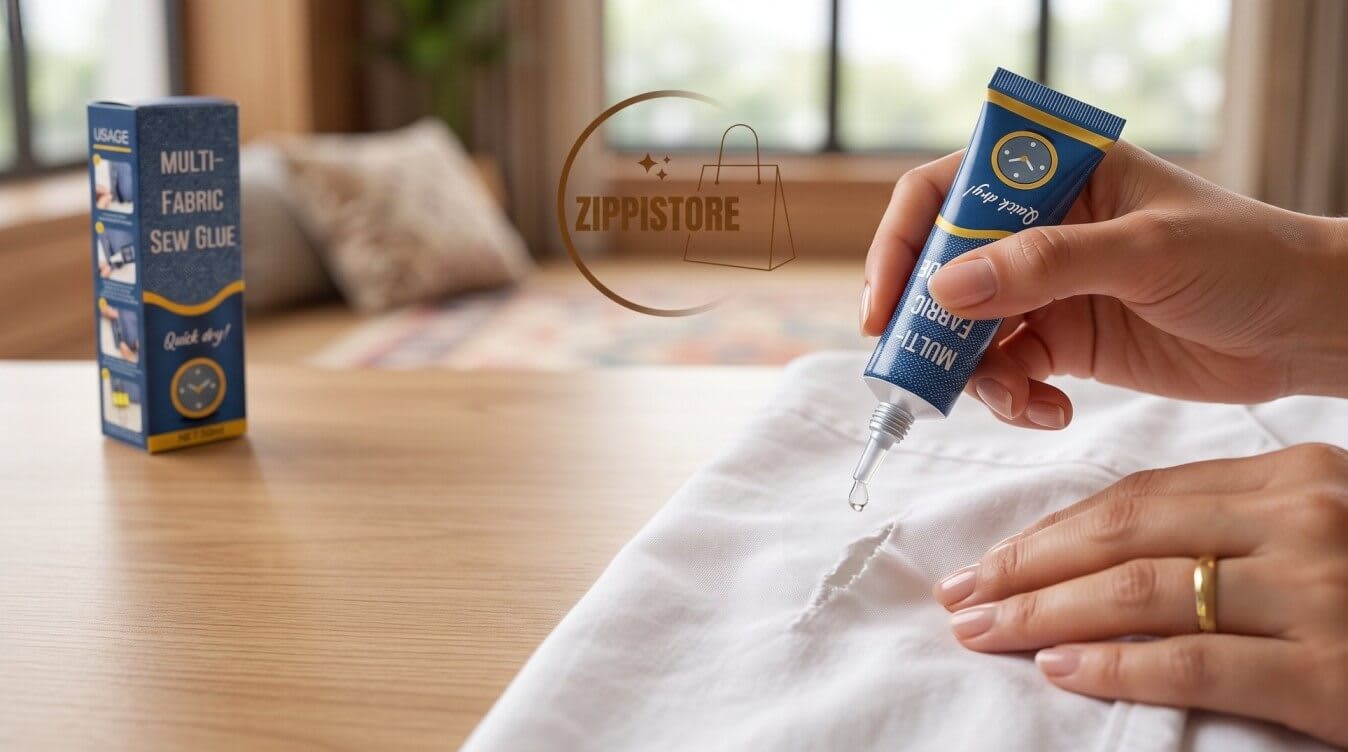
Apply a very thin, even layer of your chosen liquid fabric glue along the edges of the tear or onto the backing patch. Avoid squeezing out too much liquid, as excess glue can seep through and dry stiffly on the outside of the garment.
Step 4: Press and Hold
Gently press the glued edges together. Apply firm, even pressure for a few minutes. You can place a heavy book over the area to maintain pressure while the initial bond forms.
Step 5: Allow for Full Curing
Do not wear or wash the garment immediately. Most high-quality fabric adhesives require 24 hours to fully cure and become completely waterproof.
Recommended Products for Quick Fabric Repairs
When selecting a tool for the job, you need an adhesive formulated specifically for textiles so it remains flexible after drying.
For reliable, everyday mending, the Multi-Fabric Sew Glue Liquid Adhesive (50ml) is an excellent choice.
- Why it is needed: It replaces traditional thread for minor repairs, saving time and effort.
- Problems it solves: Fixes split seams, fallen hems, and minor tears without leaving visible stitch marks.
- Who benefits most: Busy parents repairing school uniforms, professionals needing quick fixes for workwear, and anyone looking to extend the life of their garments.
Pro Tip: Keep the adhesive nozzle clean after every use. Wipe it quickly with a dry microfiber cloth before capping it to prevent the opening from clogging.
Common Buying Mistakes with Fabric Adhesives
When shopping for no-sew solutions, avoid these frequent pitfalls:
- Using Super Glue: Standard cyanoacrylate super glues dry hard and brittle. They will ruin the fabric's flexibility and likely crack after one wash.
- Ignoring Fabric Compatibility: Always check if the glue is meant for your specific fabric type. Most liquid fabric glues work brilliantly on cotton, denim, and polyester, but may not be suitable for delicate silks or sheer nylon.
- Applying Too Much Product: A common misconception is that more glue equals a stronger bond. In reality, a thin, uniform layer creates the most secure and flexible hold.
Expert Tips for Long-Lasting Fabric Repairs
To ensure your newly repaired clothing withstands regular wear and washing, keep these insights in mind:
- Always do a patch test: Apply a tiny dot of glue on an inconspicuous inner seam to ensure it doesn't discolor the fabric.
- Use pins for slippery fabrics: If the material keeps sliding while you try to glue it, use sewing pins far away from the glue line to hold the garment taut.
- Wash garments inside out: To protect the bonded area, always turn your clothes inside out before tossing them into the washing machine.
- Understand laundry limits: Check out our guide on common laundry mistakes damaging clothes to ensure you aren't accidentally weakening your fabric repairs through improper washing techniques.
Related Topics to Explore
If you are looking for more ways to keep your home and wardrobe in top shape, browse these helpful guides:
- Home Organization and Cleaning Collections
- How to Organize Your Bathroom Without Drilling
- Best Shoe Washing Bags for Machine Washing
- Top Laundry and Cleaning Essentials
Final Takeaway
You do not need to be a skilled tailor to keep your clothes looking fresh and intact. By utilizing specialized liquid fabric glue, you can execute neat, durable repairs on tears, hems, and seams in just a few minutes. This simple approach saves money on professional alterations and prevents minor wardrobe malfunctions from ruining your day.
Key Action Items
- Keep a bottle of flexible fabric adhesive in your home emergency kit.
- Always clean and flatten the torn area before attempting a fix.
- Apply adhesive sparingly to prevent stiff spots on the clothing.
- Allow a full 24-hour curing time before washing or wearing the repaired item.