
Kitchen Hygiene Tips During Monsoon to Prevent Germs and Bad Smells
Summary
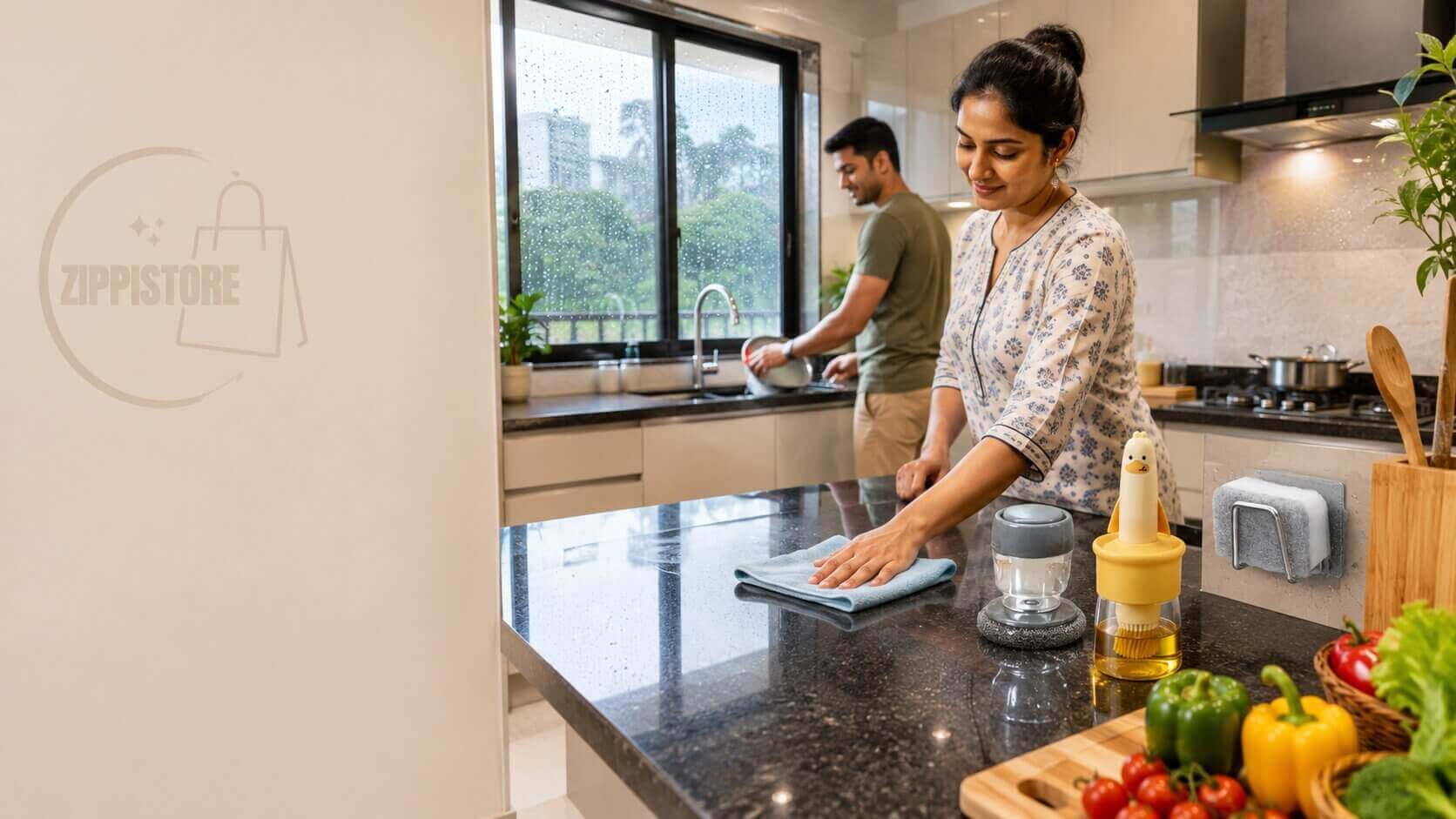
The monsoon season increases humidity, making kitchens more prone to bacteria, mould, and unpleasant odours. This guide shares practical kitchen hygiene tips to help you maintain a clean and healthy cooking environment. From keeping sponges dry and cleaning sinks regularly to organizing your dishwashing area and improving ventilation, you'll discover simple daily habits that prevent germs and bad smells. The article also highlights useful kitchen accessories that make monsoon maintenance easier, helping you create a safer and more organized kitchen for your family.
Introduction
The monsoon season brings cooler temperatures and refreshing rain, but it also creates the perfect environment for bacteria, mould, and unpleasant odours to thrive, especially in the kitchen. Increased humidity slows down the drying process, leaving sponges, dishcloths, sinks, and countertops damp for longer periods.
Without proper care, these damp conditions can lead to bacterial growth, bad smells, and even food contamination.
The good news is that maintaining a hygienic kitchen during the rainy season doesn't require hours of cleaning. With a few simple habits and the right kitchen accessories, you can keep your cooking space clean, fresh, and safe for your family.
In this guide, we'll share practical kitchen hygiene tips to help you prevent germs, eliminate unpleasant odours, and maintain a healthier kitchen throughout the monsoon.
Why Kitchen Hygiene Becomes More Important During Monsoon
Humidity levels rise significantly during the rainy season, creating favourable conditions for germs and fungi.
Common monsoon kitchen problems include:
- Damp kitchen sponges
- Bad smells from the sink
- Sticky countertops
- Slow drying utensils
- Greasy kitchen shelves
- Food spoilage
- Increased fruit flies and insects
Ignoring these issues can affect both food safety and the overall cleanliness of your kitchen.
Signs Your Kitchen Needs Better Hygiene
Watch for these warning signs:
- Unpleasant smell near the sink
- Sponge remaining wet throughout the day
- Water collecting around the sink
- Sticky cabinet handles
- Mould near windows
- Drain emitting foul odours
- Greasy cooking area
If you notice any of these problems, it's time to improve your kitchen cleaning routine.
10 Kitchen Hygiene Tips During Monsoon
1. Keep Your Kitchen Sponge Dry
Kitchen sponges absorb water throughout the day, making them one of the most common sources of bacteria.
Instead of leaving the sponge inside the sink, store it on a sponge holder where excess water can drain properly.
Benefits
- Better air circulation
- Faster drying
- Reduced bacterial growth
- Cleaner sink area
2. Clean the Sink Every Evening
Your kitchen sink collects food particles, grease, and moisture throughout the day.
Spend a few minutes every evening:
- Remove food waste
- Wash the sink with dishwashing liquid
- Rinse thoroughly
- Wipe it dry using a microfiber cloth
This simple habit significantly reduces unpleasant odours.
3. Organize Your Dishwashing Area
A cluttered sink makes cleaning more difficult.
Using a soap dispenser helps keep dishwashing liquid in one place while reducing spills around the sink.
Combine it with a sponge holder for a cleaner and more organized workspace.
4. Wipe Kitchen Countertops Frequently
Countertops often collect water droplets while preparing vegetables, washing utensils, or cooking.
Use a microfiber cleaning cloth to:
- Remove moisture
- Wipe food spills
- Prevent sticky surfaces
- Reduce bacteria
Daily wiping keeps your kitchen looking fresh.
5. Store Cooking Oil Properly
Humidity can make kitchen shelves greasy.
Using a leak resistant oil dispenser bottle helps:
- Prevent oil spills
- Keep shelves cleaner
- Reduce unnecessary cleaning
- Improve cooking convenience
6. Empty the Dustbin Every Day
Food waste decomposes faster during monsoon because of higher humidity.
To prevent bad smells:
- Empty the kitchen bin daily.
- Wash the dustbin weekly.
- Use biodegradable garbage bags.
- Keep the lid closed.
7. Replace Kitchen Towels Regularly
Damp kitchen towels quickly become breeding grounds for bacteria.
Use separate towels for:
- Hands
- Utensils
- Countertops
Wash them every two to three days during the rainy season.
8. Improve Kitchen Ventilation
Whenever weather permits:
- Open windows.
- Use the chimney while cooking.
- Turn on the exhaust fan.
- Allow sunlight to enter.
Better airflow helps reduce moisture.
9. Clean Your Refrigerator Weekly
Monsoon is a good time to inspect stored food.
Check for:
- Expired products
- Spoiled vegetables
- Fruit leaks
- Water accumulation
Keeping your refrigerator clean also prevents unpleasant smells.
10. Follow a Daily Kitchen Cleaning Routine
A simple routine keeps your kitchen fresh without requiring deep cleaning every day.
Morning
- Wipe countertops
- Wash breakfast utensils
- Empty sink
Afternoon
- Organize frequently used items
- Dry the sponge
- Wipe spills immediately
Evening
- Clean the sink
- Empty the dustbin
- Dry countertops
- Wash dishcloths if needed
Common Kitchen Hygiene Mistakes During Monsoon
Avoid these habits:
- Leaving wet sponges inside the sink
- Storing vegetables without drying them
- Ignoring sink drainage
- Allowing dirty dishes to pile up overnight
- Using the same cloth for every cleaning task
- Not cleaning the refrigerator regularly
Weekly Kitchen Hygiene Checklist
| Monday | Clean the sink and drain thoroughly |
| Tuesday | Wash dishcloths and replace kitchen towels |
| Wednesday | Organize shelves and wipe cabinets |
| Thursday | Clean the refrigerator and remove expired food |
| Friday | Wash sponge holder and soap dispenser |
| Saturday | Deep clean the cooking area and chimney exterior |
| Sunday | Sanitize countertops and organize kitchen accessories |
Kitchen Accessories That Help During Monsoon
The right accessories make daily cleaning easier.
Recommended essentials:
- Sponge Holder
- Soap Dispenser
- Microfiber Cleaning Cloth
- Oil Dispenser Bottle
- Kitchen Storage Organizers
Expert Tips
- Never leave wet utensils overnight.
- Dry vegetables before storing them.
- Wash reusable cleaning cloths regularly.
- Keep spices in airtight containers.
- Clean the sink strainer every day.
- Replace worn out sponges frequently.